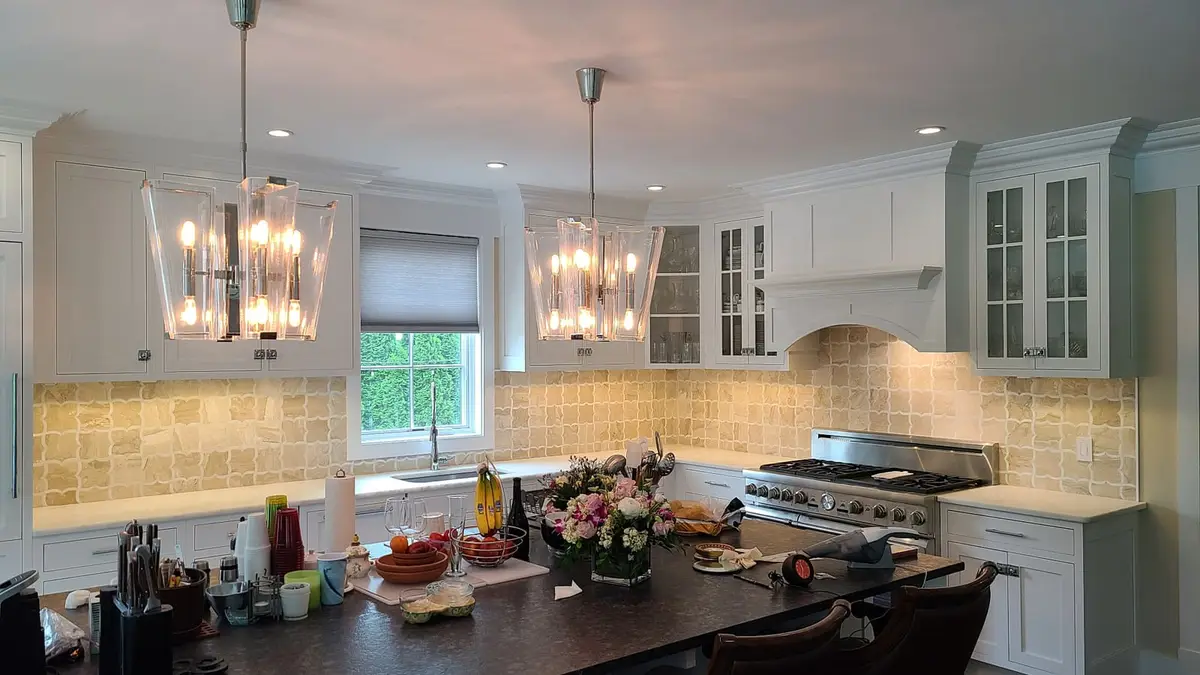
Peel-and-Stick Backsplash vs Real Tile: An Installer's Honest Take
TL;DR
Peel-and-stick is a decoration; tile is a surface. In a rental, a staged house or a wall that never sees a pan, peel-and-stick is a fair answer. In a kitchen you cook in, it lifts behind the range and curls at the sink within a year or two, and it comes off with the paint.
Quick Decision Guide:
- →Renting or selling? Peel-and-stick is a reasonable one-year answer
- →Cooking behind it? Heat and grease lift the adhesive — real tile
- →Around the sink the edges curl — real tile
- →The cheapest real backsplash is straight-set ceramic subway, and it lasts decades
Where I Land
I don't sell peel-and-stick, so take this for what it is: sixteen years of being called into kitchens in Norwalk and White Plains after it, and a few where it was the right call. It has a place. That place is not behind a range you use.
From across the room
Peel-and-stick: Convincing, in photos especially
Real tile: The real thing
From a foot away
Peel-and-stick: Printed pattern, flat edges, repeating sheets
Real tile: Depth, glaze, real joints
Behind the range
Peel-and-stick: Heat and grease lift the adhesive within a year or two
Real tile: Unbothered for decades
Around the sink
Peel-and-stick: Edges curl where water sits
Real tile: Sealed caulk line, no edges to lift
Outlets and corners
Peel-and-stick: Cut with scissors; corners telegraph
Real tile: Cut, trimmed and finished
Lifespan
Peel-and-stick: One to three years in a working kitchen
Real tile: Twenty-plus
Removal
Peel-and-stick: Peels off — sometimes with the paint
Real tile: Demolition and drywall repair
The right call when
Peel-and-stick: Renting, staging, or a wall that never sees a pan
Real tile: It's your kitchen and you cook in it
| Peel-and-stick | Real tile | |
|---|---|---|
| From across the room | Convincing, in photos especially | The real thing |
| From a foot away | Printed pattern, flat edges, repeating sheets | Depth, glaze, real joints |
| Behind the range | Heat and grease lift the adhesive within a year or two | Unbothered for decades |
| Around the sink | Edges curl where water sits | Sealed caulk line, no edges to lift |
| Outlets and corners | Cut with scissors; corners telegraph | Cut, trimmed and finished |
| Lifespan | One to three years in a working kitchen | Twenty-plus |
| Removal | Peels off — sometimes with the paint | Demolition and drywall repair |
| The right call when | Renting, staging, or a wall that never sees a pan | It's your kitchen and you cook in it |
What Happens Behind the Range
The adhesive on a peel-and-stick sheet is pressure-sensitive glue. Heat softens it; grease works under the edges. Behind a range those two arrive every evening, and within a year or two the sheet bellies away from the wall and the corners lift. That's the wall people photograph when they ask me to fix it.
What Happens at the Sink
The seams between sheets sit exactly where water lands. Water gets in, the paper backing swells, the edge curls, and the curl catches the next splash. A real tile backsplash has one sealed caulk line at the counter and no edges to lift.
The Look, Up Close
From across the room, the good kits are convincing — that's what the product photos are. From a foot away, which is where you stand at a counter, a printed pattern is flat: no depth in the glaze, no real joint, and a repeat every sheet or two that the eye finds once and can't unsee.
The Removal Surprise
"Removable" means it peels. What it peels off is the paint, sometimes the paper face of the drywall with it. In a rental, test a corner before you cover a wall — and either way, plan to repaint when it comes down.
When Peel-and-Stick Is the Right Call
- Renting, with a landlord who won't allow tile. Test a corner first.
- Staging a house to sell, where it needs to look good in photographs for a month.
- A wall that never sees a pan — a laundry room, a bar, a coffee station.
- A bridge: a year of something on the wall while you save for the real thing. Just know it's a year.
The Middle Ground Nobody Mentions
The least expensive real backsplash is straight-set ceramic subway with matching grout. It installs in two days, it's the most forgiving look on a wall, and it's still there in twenty years. If the appeal of peel-and-stick is the number, price the real thing before deciding — it's often closer than the kits' marketing suggests.
FAQs
Can you put peel-and-stick behind a stove?
You can, and it's the first place it fails. Heat softens the adhesive and grease gets under the edges. If the range is in daily use, tile that wall.
Does peel-and-stick backsplash damage walls?
Coming off, usually yes: it takes paint and sometimes the paper face of the drywall. Test a corner before committing, and budget a repaint.
How long does peel-and-stick last?
One to three years in a working kitchen, longer on a wall that stays dry and cool. Tile is measured in decades.
Is peel-and-stick cheaper than tile?
Up front, yes. Over the years a kitchen exists, usually not — it gets done twice, and the second time includes the wall repair.
See What Real Tile Costs First
Before you buy the kit, type your wall's size into the box at the top of our homepage. A real price band for real tile appears as you type, and it's the honest comparison.
Serving Fairfield & Westchester County
We install backsplashes throughout Connecticut and New York. See your town's service page for local examples and reviews.
Continue Reading
Explore more expert guides and insights
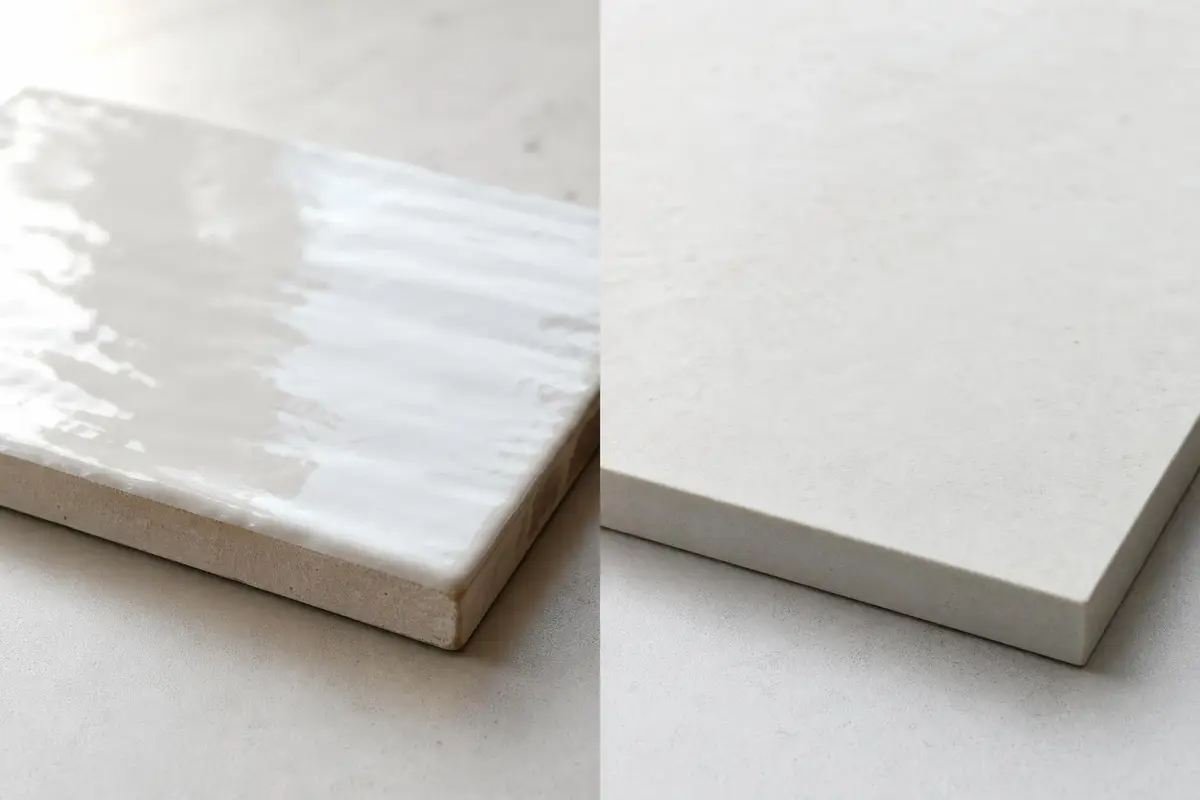
Ceramic vs Porcelain: What Actually Matters for Your Backsplash
After sixteen years of installs, here's what I've learned about ceramic vs porcelain for kitchen backsplashes—and when each makes sense.
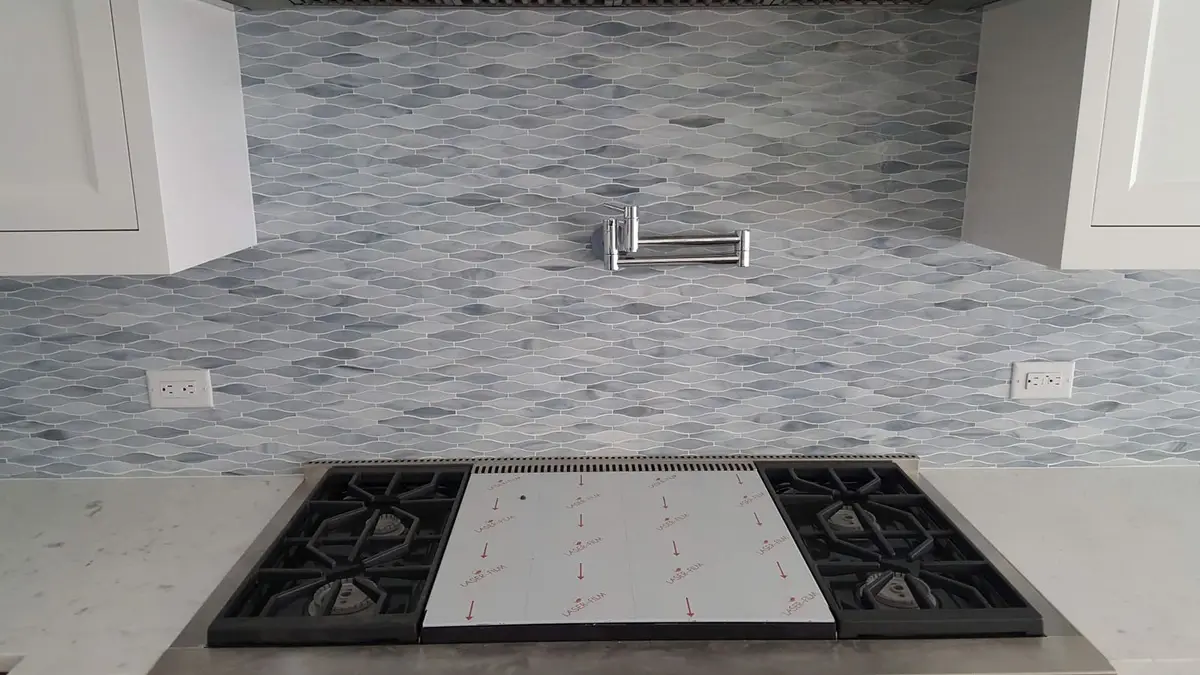
How to Finish the Edges of a Backsplash: Schluter, Bullnose or Pencil Liner
Every exposed tile edge needs a finish: metal profile, bullnose or pencil liner. What each looks like in section, which lines offer which, and how to buy it.