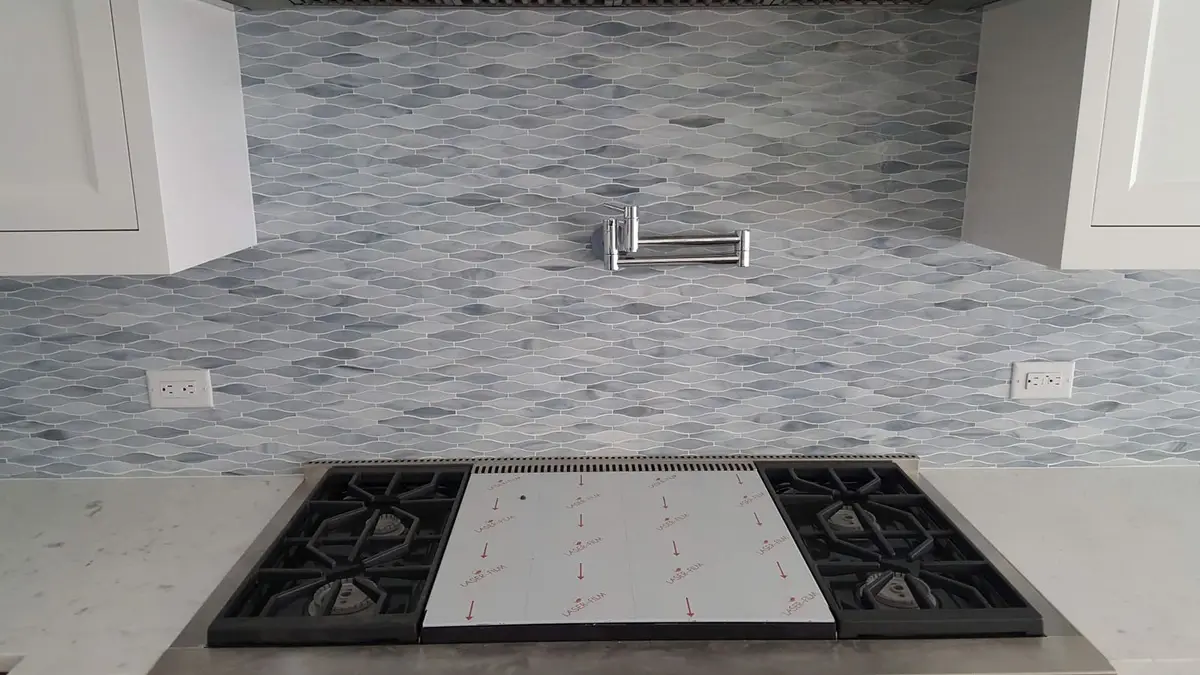
How to Finish the Edges of a Backsplash: Schluter, Bullnose or Pencil Liner
TL;DR
Any tile edge that ends in the open needs one of three finishes: a metal profile (Schluter Jolly or Rondec), a bullnose tile if your line makes one, or a pencil liner. Match the metal's finish to your faucet, match a pencil to the tile, and buy the trim with the tile — it's yours to supply.
Quick Decision Guide:
- →Exposed edge? It needs a finish — a raw cut edge always reads unfinished
- →Metal profile: cleanest modern edge; pick the finish to match the faucet
- →Bullnose: only if your tile line offers one — most handmade and mosaic lines don't
- →Buy the profile sized to the tile's thickness; bring a tile to the store
What an Exposed Edge Is
Most of a backsplash ends against something: a cabinet, a wall, a corner. Those edges need nothing. The edge that needs a decision is the one that ends in the open — where the counter run stops short of the wall, along the top of a full-height section, around a window with no trim. Leave that edge as it was cut and you see the tile's body: unglazed, a different color, and the one detail that makes a wall look like a first attempt.
Option 1: A Metal Profile
The Schluter-type profile is an L-shaped strip. Its long leg sits under the last tile in the thinset; its short lip stands proud of the tile's edge and covers it. Two shapes matter for a backsplash: Jolly, a square edge, and Rondec, a rounded one. Jolly is the modern default; Rondec softens a traditional kitchen.
It has to go in with the tile — it can't be added after — and it comes in finishes: brushed nickel, satin brass, matte black, bright white, a few more. Match the faucet or the cabinet hardware, not the tile. A brass profile beside a brass faucet reads as intended; the same profile next to chrome reads as a mistake.
The size is the tile's thickness. Most 3×6 ceramic is around 5/16 to 3/8 of an inch; mosaics on mesh are thinner; stone is thicker. Take a tile to the store and match it. Too small and the profile sits below the tile face; too big and it stands above it.
Option 2: A Bullnose Tile
Some tile lines make a matching piece with one rounded, glazed edge — a bullnose. Set it as the last tile and the edge is finished in the tile's own color, no metal. It's the quietest finish there is, and it's only available when the line offers it: most machine-made subway lines do, handmade lines sometimes, mosaics never. Check before you commit to a tile if a bullnose edge is what you want.
Option 3: A Pencil Liner
A pencil liner is a slim, rounded trim tile set beside the field as a border. Marble pencils with marble tile is the classic pairing; ceramic lines often make one to match. It adds a line the eye reads as a frame, so it suits traditional kitchens and reads a little decorative in modern ones.
When the Edge Needs Nothing
An inside corner, a cabinet side, a wall: the tile ends against a surface and the seam gets caulked. No trim. And where two tile fields meet at an outside corner in stone or porcelain, the edges can be cut at 45 degrees and mitered together — a clean corner with no third material, and extra cutting time.
What to Buy, and How Much
Measure the exposed edges in feet. Profiles come in lengths of about eight feet; buy one more than the math says, because corners waste some. Bullnose and pencil pieces are sold per piece or per foot in the same line as the tile. All of it is yours to supply, so buy it with the tile and from the same place — the measuring guide covers the tile itself.
FAQs
Do I need Schluter trim on a backsplash?
Only where a tile edge ends in the open. Edges that meet a cabinet, a wall or a corner need nothing. If every edge of your backsplash lands on something, skip it.
Which Schluter size do I need?
The one that matches your tile's thickness. Bring a tile to the store and hold profiles against it; the lip should sit flush with the glazed face.
Bullnose or Schluter — which looks better?
Bullnose disappears; metal makes a line. In a traditional kitchen with a tile that offers a bullnose, use the bullnose. In a modern kitchen, or with any tile that has no bullnose, a Jolly profile in the faucet's finish looks right.
What finish should the metal profile be?
Whatever the faucet is. If the faucet and the hardware disagree, follow the faucet — it's closer to the tile.
Price the Wall, Edges Included
Trim is a small line on the order and a big one on the finished wall. Our instant quote prices the installation for your wall; tell us the edge finish you've chosen and we'll install to it.
Serving Fairfield & Westchester County
We install backsplashes throughout Connecticut and New York. See your town's service page for local examples and reviews.
Continue Reading
Explore more expert guides and insights
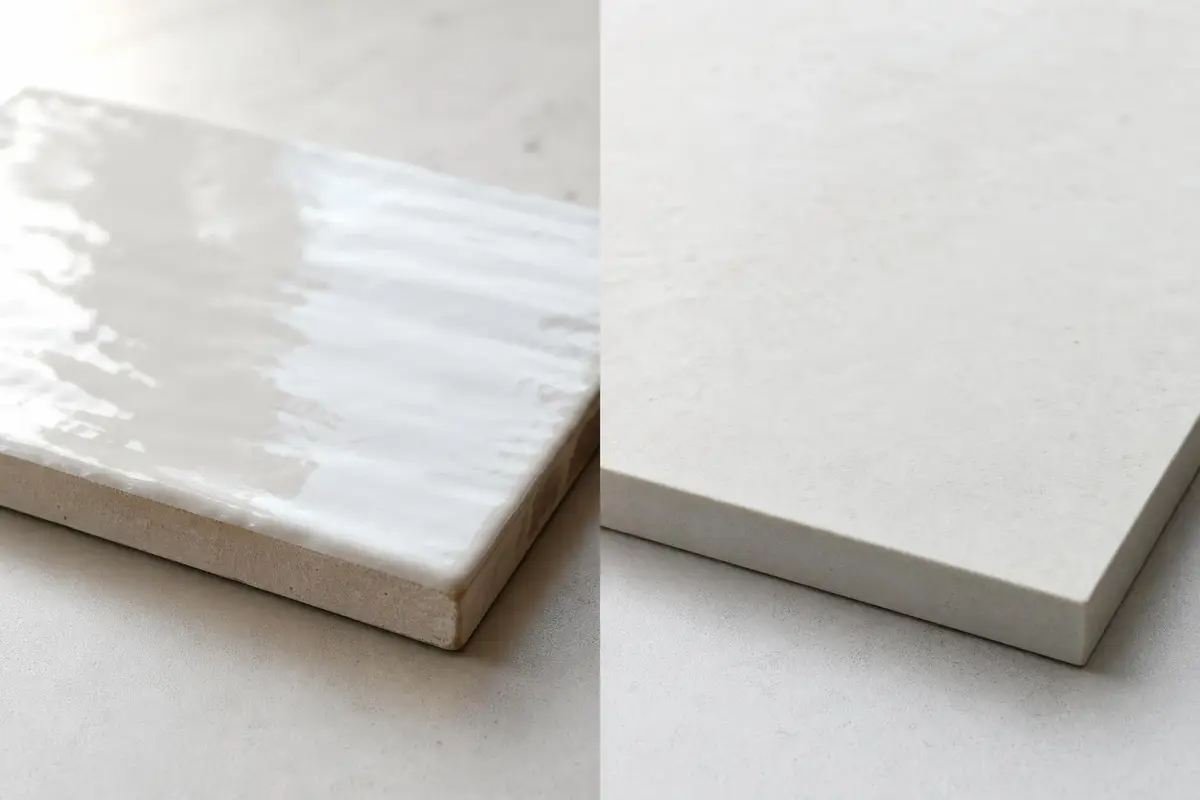
Ceramic vs Porcelain: What Actually Matters for Your Backsplash
After sixteen years of installs, here's what I've learned about ceramic vs porcelain for kitchen backsplashes—and when each makes sense.
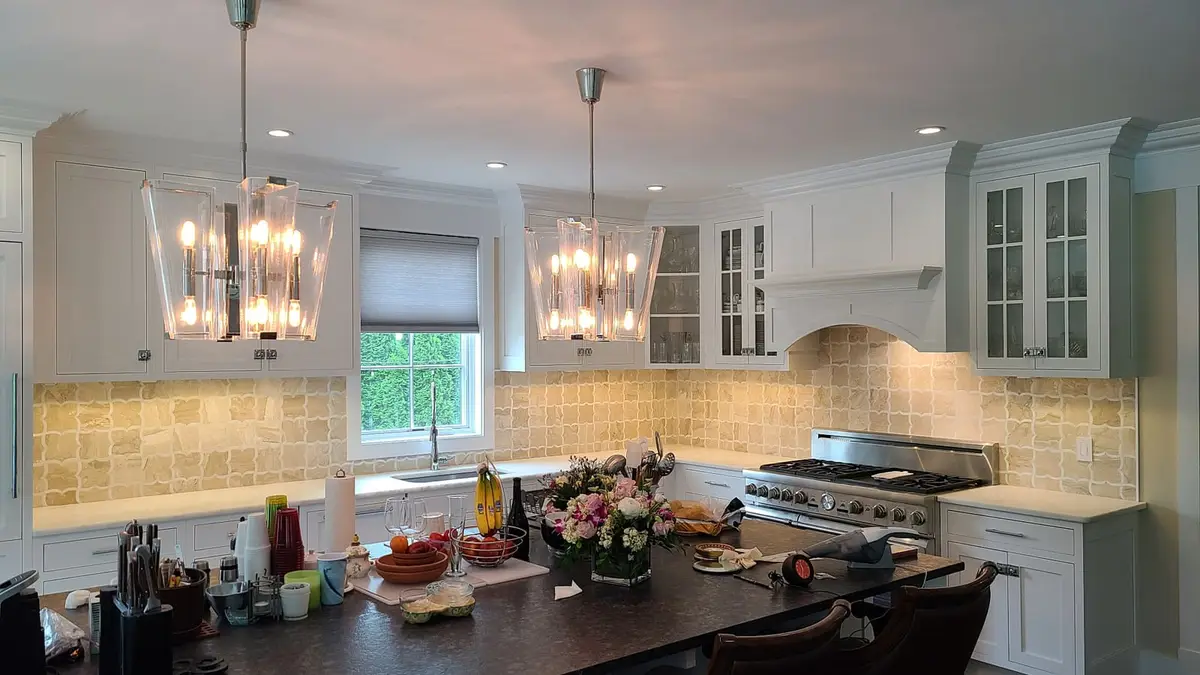
Peel-and-Stick Backsplash vs Real Tile: An Installer's Honest Take
Where peel-and-stick backsplash works, where it fails within a year, and what it does to the wall on the way out. From an installer who gets called after both.