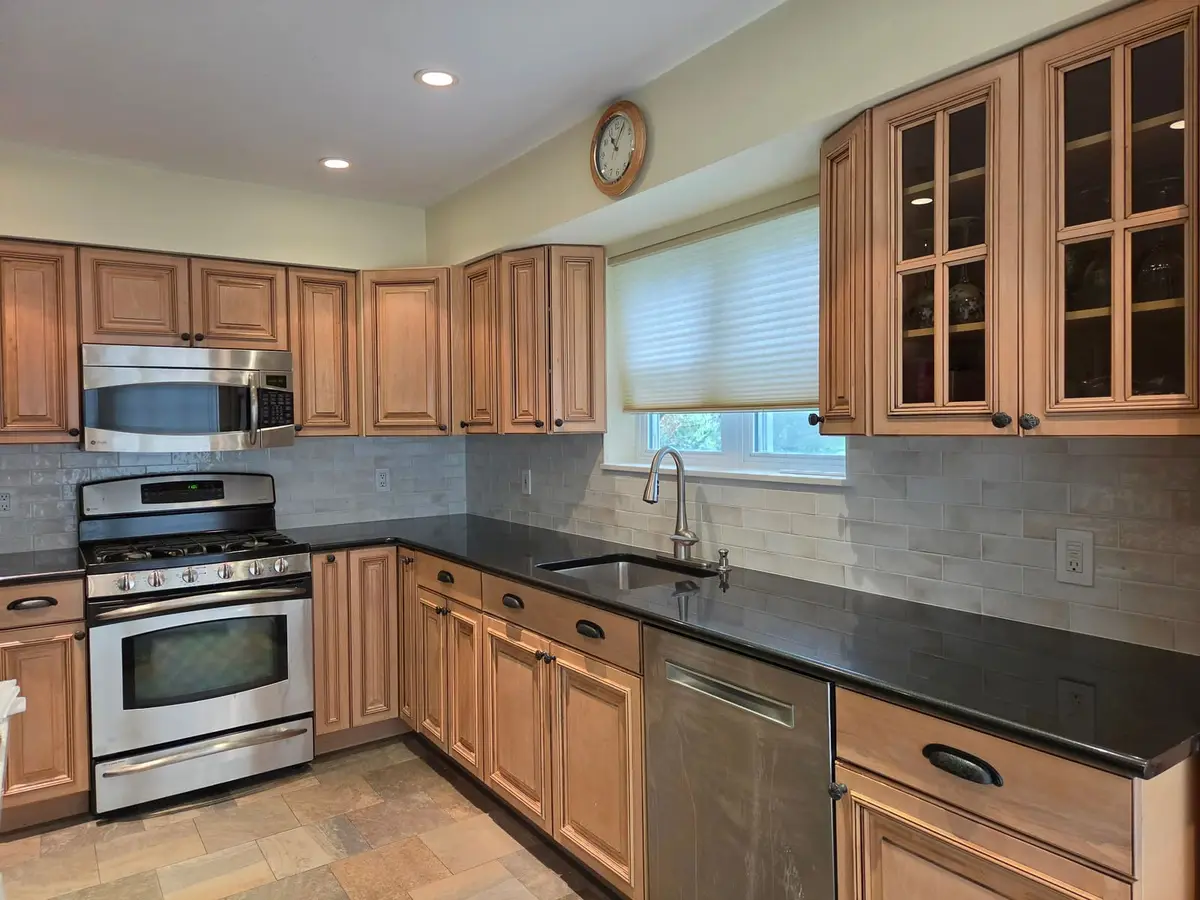
Grout Line Width: How to Choose, and What Your Tile Requires
TL;DR
The tile decides the floor and the look decides the rest. Rectified tile takes a 1/16" joint for the seamless look; pressed-edge ceramic and most subway want 1/8"; handmade and non-rectified large format want 1/8" to 3/16". Never below 1/16", and never tighter than three times the tile's own size variation.
Quick Decision Guide:
- →Rectified (machine-squared) tile: 1/16" for seamless, 1/8" for classic
- →Pressed-edge ceramic and most subway: 1/8" — tighter makes the lines wander
- →Zellige, handmade, big non-rectified tile: 1/8" to 3/16"
- →Glass and polished stone: unsanded grout, whatever the width
- →Mosaic sheets: you match the sheet's joint, you don't choose one
The Decision Nobody Makes on Purpose
Every backsplash has two grout decisions. The color gets sampled, argued over and thought about. The grout line width gets decided by whichever bag of spacers was in the truck.
And the width is the one that changes how the tile itself reads. The same white 3x6 subway at a 1/16" joint is a sheet of porcelain with faint seams. At 1/8" it's a wall of bricks. At 3/16" it's a farmhouse.
After sixteen years of setting backsplash tile across Fairfield and Westchester, here is how the grout line width actually gets chosen — starting with the part that isn't a choice.
The Tile Sets the Floor
Tile has an edge, and the edge decides the narrowest joint it can honestly take.
Rectified tile has been cut square by a machine after firing, so every piece is the same size to within a hair and the edges are sharp. It's the only tile that holds a 1/16" joint without the lines wandering. The box says "rectified"; the edge feels like a razor and the corners are true right angles. Most porcelain and stone comes this way.
Pressed-edge (cushion-edge) tile comes out of the mold and kiln as it is: slightly rounded edges, and sizes that vary a little across the box. That includes most ceramic subway tile on the market. Set it at 1/16" and the size differences have nowhere to go, so the grout lines drift — a hair wide here, a hair tight there — and the eye finds it from across the room. At 1/8" the variation disappears into the joint.
Handmade tile — zellige, hand-cut ceramic — varies by design, in size, in flatness and at the edge. It wants 1/8", sometimes more, and a grout that matches its middle tone.
The rule behind all of it
The industry standard is ANSI A108.02, the specification the Tile Council of North America handbook points to. It sets a floor of 1/16" for any grout joint. And it says the joint should be at least three times the tile's actual size variation: a tile that varies 1/16" across a box needs a 3/16" joint, whatever the showroom photo showed.
The same standard allows a little lippage — one tile sitting slightly proud of the next, about 1/32" on narrow joints. That is why big tile gets a wider joint than small tile: the joint is what absorbs the difference.
What Each Width Looks Like
1/16" — near-seamless
The tile reads as one surface with a faint grid, and the pattern is the tile's shape rather than the grout's. It only works on rectified tile, and it wants an unsanded grout in a color close to the tile.
It also shows every cut — around an outlet, at an inside corner, under a cabinet — because there is no joint to hide a sixteenth of an inch of error in. The tile has to be flat, the wall has to be flat, and the person setting it has to care.
1/8" — the default
For most kitchens, the right answer. It absorbs the variation in ordinary ceramic, it takes sanded or unsanded grout, and it reads as "tile" without reading as "grout". Classic subway is a 1/8" joint. If you don't have a reason to pick something else, this is the width.
3/16" — the joint becomes design
Handmade tile, big non-rectified tile and anything meant to look hand-laid lives here. At this width the grout color matters more than the tile color: a 3/16" joint in a contrasting grout is the busiest wall you can build, and in a matching grout it's calm.
1/4" and wider
Floors, patios, the occasional deliberately rustic wall. Almost never a backsplash — it looks like a floor stood on end.
Grout Line Width by Tile
| Tile | Joint | Grout | Why |
|---|---|---|---|
| Rectified porcelain or ceramic | 1/16" to 1/8" | Unsanded at 1/16"; either at 1/8" | Machine-squared edges are what make a 1/16" joint possible. The near-seamless look; every cut shows. |
| Pressed-edge (cushion-edge) ceramic, incl. most subway | 1/8" | Sanded, or a wide-range grout | The edges are slightly rounded and the sizes vary a hair. 1/8" hides it; 1/16" makes the lines wander. |
| Beveled subway | 1/16" to 1/8" | Unsanded at 1/16" | The bevel already draws the grid, so a wide joint doubles it. Keep it tight. |
| Large format (any side over 15"), rectified | 1/8" | Sanded, or a wide-range grout | Big tile shows lippage; the joint is what absorbs it. Tighter than 1/8" on a backsplash is asking for a proud edge to catch the light. |
| Large format, not rectified | 3/16" | Sanded | The size variation across a box is real at this scale. The standard's 3x rule lands here. |
| Zellige and handmade | 1/8" (1/16" if sorted and set tight) | Sanded at 1/8"; in the tile's middle tone | Irregular by design. The joint absorbs the edges; the grout color decides whether that reads as character or noise. |
| Glass | 1/16" to 1/8" | Unsanded only | Sanded grout scratches glass. The joint shows through the tile's edge, so the color matters more than the width. |
| Mosaics on mesh (hex, penny, small squares) | Set by the sheet, usually 1/8" | As the sheet's joint requires | You don't choose the width — you match it. The joint between sheets has to equal the joint inside them, or the sheets show. |
| Marble and natural stone, honed or polished | 1/16" to 1/8" | Unsanded on polished faces | Stone is usually rectified, so it takes a tight joint. Sanded grout can scratch a polished face. |
Rectified porcelain or ceramic
1/16" to 1/8"
Grout: Unsanded at 1/16"; either at 1/8"
Machine-squared edges are what make a 1/16" joint possible. The near-seamless look; every cut shows.
Pressed-edge (cushion-edge) ceramic, incl. most subway
1/8"
Grout: Sanded, or a wide-range grout
The edges are slightly rounded and the sizes vary a hair. 1/8" hides it; 1/16" makes the lines wander.
Beveled subway
1/16" to 1/8"
Grout: Unsanded at 1/16"
The bevel already draws the grid, so a wide joint doubles it. Keep it tight.
Large format (any side over 15"), rectified
1/8"
Grout: Sanded, or a wide-range grout
Big tile shows lippage; the joint is what absorbs it. Tighter than 1/8" on a backsplash is asking for a proud edge to catch the light.
Large format, not rectified
3/16"
Grout: Sanded
The size variation across a box is real at this scale. The standard's 3x rule lands here.
Zellige and handmade
1/8" (1/16" if sorted and set tight)
Grout: Sanded at 1/8"; in the tile's middle tone
Irregular by design. The joint absorbs the edges; the grout color decides whether that reads as character or noise.
Glass
1/16" to 1/8"
Grout: Unsanded only
Sanded grout scratches glass. The joint shows through the tile's edge, so the color matters more than the width.
Mosaics on mesh (hex, penny, small squares)
Set by the sheet, usually 1/8"
Grout: As the sheet's joint requires
You don't choose the width — you match it. The joint between sheets has to equal the joint inside them, or the sheets show.
Marble and natural stone, honed or polished
1/16" to 1/8"
Grout: Unsanded on polished faces
Stone is usually rectified, so it takes a tight joint. Sanded grout can scratch a polished face.
Widths we set to on real backsplashes, inside the industry floor of 1/16". If the tile's own box says otherwise, the box wins.
The Pattern Changes the Answer
The pattern you lay the tile in moves the width one way or the other.
- Herringbone and chevron are made of cuts, and every joint meets another at an angle. A tight joint shows the precision of the cutting; a wide one softens it. Go 1/16" only on rectified tile, with an installer whose cuts you've seen.
- Stacked — straight rows, straight columns — is the least forgiving layout there is. Every joint has to line up in two directions at once. Rectified tile and a tight joint, or it looks crooked no matter how straight it is.
- Running bond, the classic offset subway, hides variation better than any other layout, which is why it has been the default for a century. It takes 1/8" on pressed tile happily. The Scarsdale refresh at the top of this page is a running-bond subway wall.
- Mosaics on mesh — hex, penny, small squares — come with their joint decided. You match it where the sheets meet. If the joint between sheets is wider than the joint inside them, the wall shows a faint grid the size of a sheet, forever.
Sanded or Unsanded
The width chooses the grout, not the other way around. Sanded grout has fine sand in it for strength and shrinks less in a wide joint: 1/8" and up. Unsanded grout is smooth and packs into a narrow joint: 1/16" to about 1/8". Unsanded is also the only kind that goes on glass or a polished stone face, because sand scratches both.
The two lines we install, Laticrete PERMACOLOR Select and Mapei Ultracolor Plus FA, are wide-range grouts that cover 1/16" and up in one bag. That settles the sanded-or-unsanded question everywhere except glass and polished marble, where the unsanded versions (PERMACOLOR Select NS, Keracolor U) are the ones to buy.
The Mistakes That Show Forever
- Choosing the width before the tile is in hand. The showroom sample is one tile; the variation lives in the box. Check the box, then choose.
- Forcing 1/16" on pressed-edge tile. The most common one, and the reason a lot of subway walls look slightly drunk. The tile didn't fail; the joint was too tight to absorb it.
- A different joint on the trim. Pencil liners, bullnose and edge tile often come from a different line with a different edge. They get the same joint as the field, or the change in rhythm shows.
- Wide joint, contrasting color, small kitchen. Each one is fine. All three together is graph paper.
- Grouting the joints that should be caulked. Where the tile meets the counter, and at every inside corner, the two surfaces move differently. Those seams get a matching flexible sealant, not grout, or they crack within the year. The width there is set by the gap, not by the spacers.
My Recommendation
Rectified tile and a modern kitchen: 1/16", unsanded, matched color. Anything else: 1/8", and stop thinking about it. Handmade or big non-rectified tile: 1/8" to 3/16", and put the thought into the grout color instead — the handmade Moroccan wall we set in Stamford is that decision made well. In every case, the narrowest joint the tile honestly allows, never narrower.
FAQs
Can I use a 1/16" joint on subway tile?
Only if it's rectified, and most ceramic subway isn't. Pressed-edge subway at 1/16" is the single most common reason grout lines wander. Set it at 1/8" and it looks like the photo you saved.
Does the grout line width change what the installation costs?
Not on our side — the price is the same whichever spacers go in. It can change the tile side: a 1/16" look needs rectified tile, which often costs more than the pressed-edge version of the same look.
What size spacers should I buy?
You don't need to. We bring them. If you're curious, 1/8" cross spacers are the classic; wedges are the usual choice on handmade tile, so each joint can be nudged to average out the tile's variation.
Sanded or unsanded for a 1/8" joint?
Either, on ceramic or porcelain. Unsanded on glass or a polished stone face. With a wide-range grout like Ultracolor Plus FA the question goes away for everything except glass.
Are wider grout lines harder to keep clean?
There's more grout to wipe, so a little — and on a backsplash the answer is sealing it, whatever the width. A sealed light grout behind a range wipes clean; an unsealed one at any width doesn't.
See the Number First
The joint is a decision you can make after the price. Our instant quote calculator gives you a real number for your wall in about a minute, and the materials guide covers what each tile needs. The grout line width is free either way.
Serving Fairfield & Westchester County
We install backsplashes throughout Connecticut and New York. See your town's service page for local examples and reviews.
Continue Reading
Explore more expert guides and insights
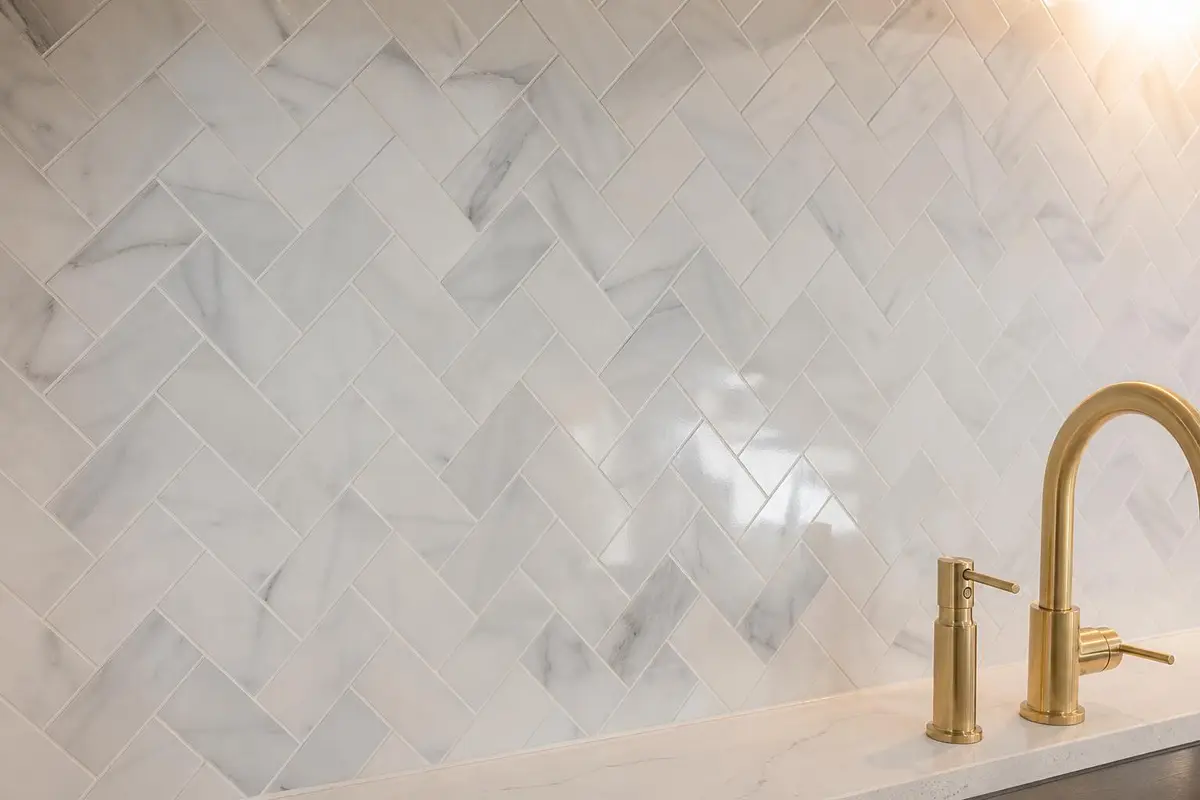
Subway, Herringbone, or Chevron: Which Pattern Fits Your Kitchen?
Same tile, different patterns, dramatically different costs. Here's what each pattern looks like, costs, and when it makes sense.
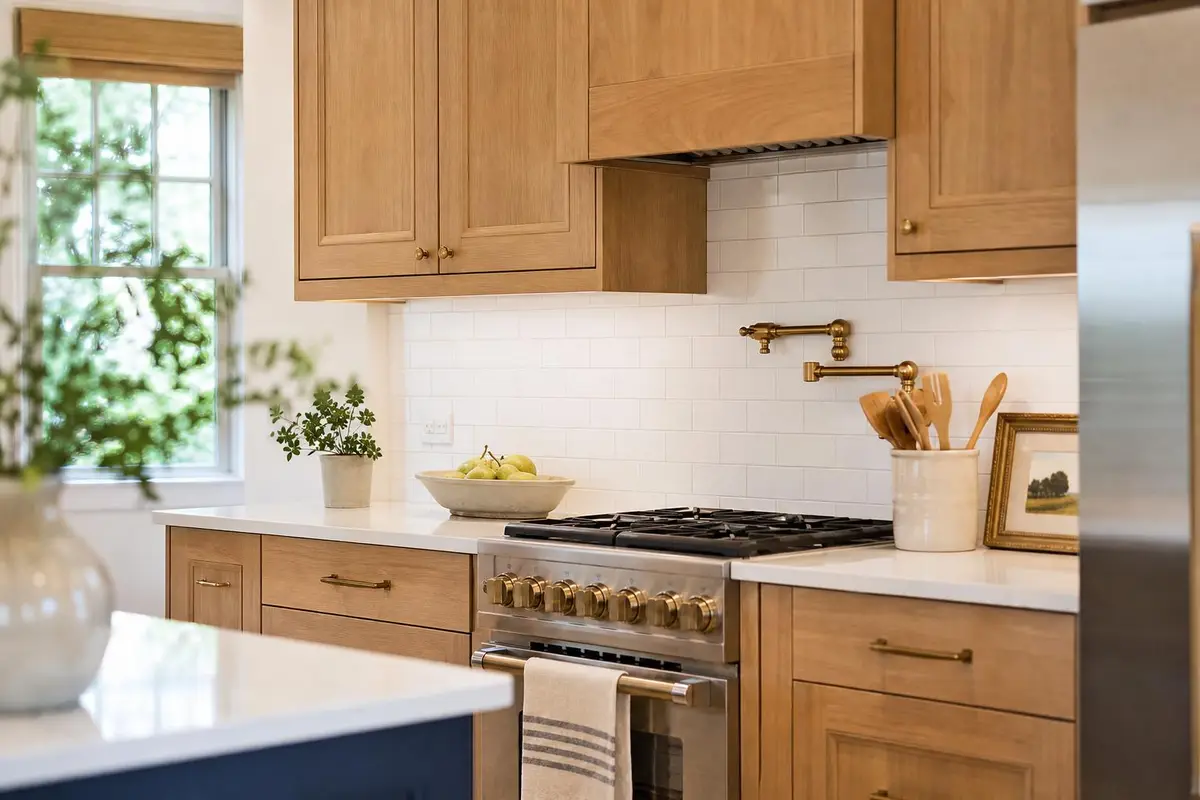
Small Kitchen Backsplash Ideas That Actually Make the Room Feel Bigger
Most small-kitchen backsplash advice is wrong. After sixteen years of installs across Fairfield County, here's what actually opens up a tight kitchen.